In this story
An ingredient list is one of the most concrete pieces of information on a cosmetic package. It is also easy to ask it for answers it cannot provide. The list can help you identify ingredients you avoid, understand a formula’s broad structure, and compare versions of a product. It cannot reliably tell you whether the product will feel elegant, deliver a specific result, or suit your skin.
Ingredient literacy begins by separating label facts from formulation guesses.
Understand the order—and its limits
For cosmetics marketed in the United States, ingredients are generally declared in descending order of predominance. The FDA’s labeling summary notes important exceptions: ingredients at one percent or less and color additives can be listed differently under the applicable rules. Other markets have their own requirements.
This means the top of a U.S. cosmetic list offers clues about the formula base. It does not provide exact percentages. Once you reach the lower-concentration region, relative position becomes less informative. You usually cannot identify the “one percent line” by sight.
Do not treat a high position as automatically good or a low position as useless. Some ingredients are designed to work at small amounts; others mainly form the bulk and texture of a product. Function and effective use level differ.
Sunscreens and certain other products can be regulated differently depending on market and claims. In the United States, products that are both cosmetics and drugs identify active drug ingredients separately. Read the label structure before comparing it with an ordinary cosmetic.
Read by functional groups
Instead of hunting for one hero, look for the jobs that make the product work:
- Base and solvents help dissolve or carry other ingredients.
- Humectants help attract and hold water within a formula and at the skin surface.
- Emollients and occlusives influence softness, slip, and moisture loss.
- Surfactants cleanse, solubilize, or help oil and water mix.
- Thickeners and film-formers shape texture, hold, and wear.
- Preservative systems help protect a water-containing product from microbial growth during its intended use.
- Fragrance and color materials affect sensory experience and appearance.
One ingredient can perform more than one job. The complete system determines whether a lotion spreads lightly, a foundation resists transfer, or a cleanser rinses without an unpleasant film.
Preservatives are a good example of why context matters. Removing one familiar preservative does not make a water-based formula self-preserving; it requires another suitable system and appropriate manufacturing and packaging. “Preservative-free” should not be used as a universal shorthand for safer.
Compare formulas without declaring twins
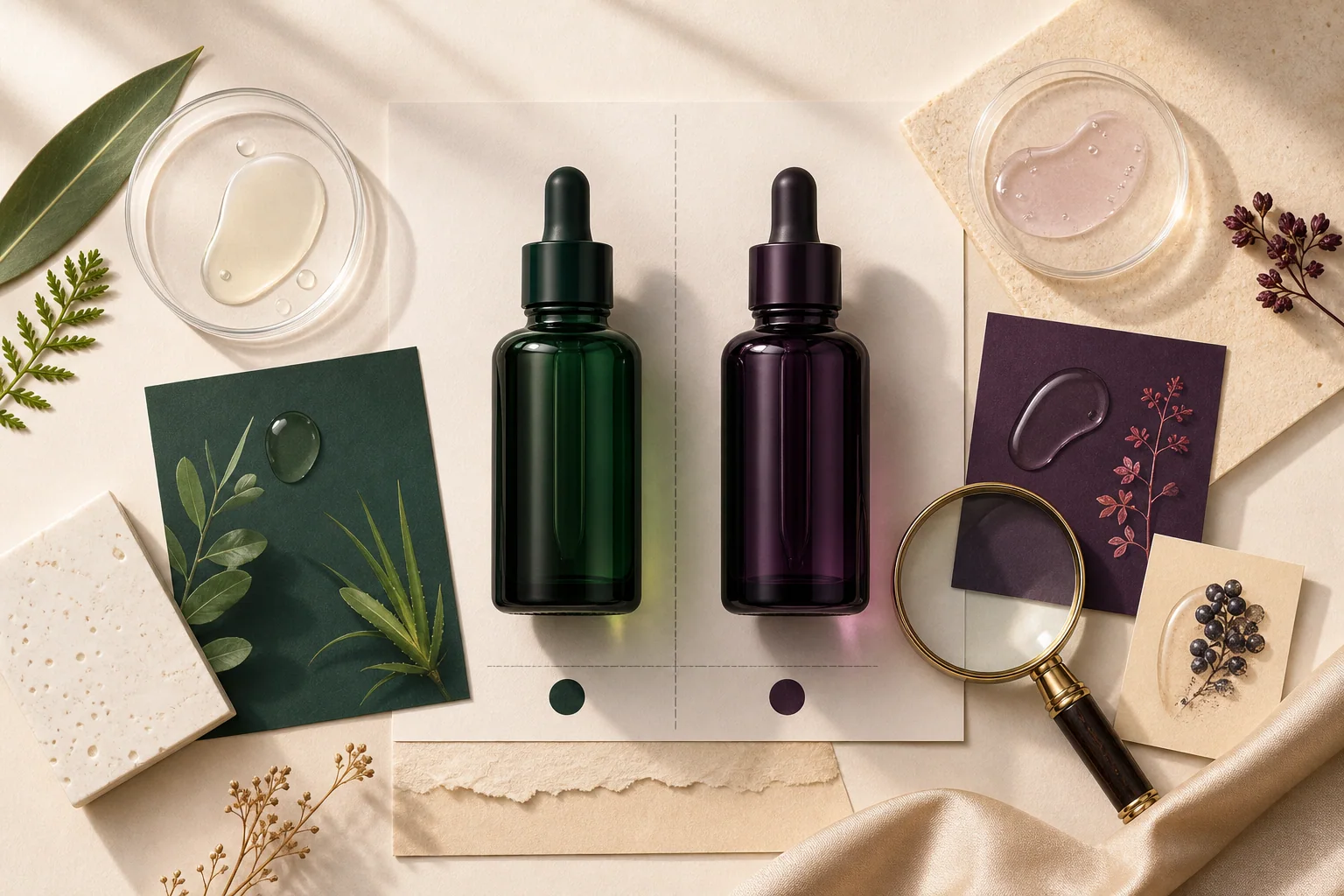
Two products with similar first ingredients may share a broad base, which can make them reasonable candidates for a wear test. They can still differ in percentages, pigments, polymers, fragrance, processing, or low-level ingredients that materially change texture and stability.
An exact-looking ingredient match can also be misleading when one list was copied from a retailer that has not updated after a reformulation. Compare the current package when possible, record the market, and note the date.
For a dupe comparison, combine label reading with direct observations:
- product format and directions;
- texture and application;
- finish at a consistent dose;
- wear under comparable conditions;
- packaging and price per amount.
The ingredient list helps explain possibilities. The wear test establishes the result.
Treat “free-from” claims as narrow statements
“Free from” can be useful when it names an ingredient you specifically need or choose to avoid. It does not establish that the product is broadly safer or gentler. “Natural,” “clean,” “non-toxic,” and similar marketing terms can have inconsistent definitions across brands and retailers.
Hazard and real-world risk are not interchangeable. Safety depends on dose, route of exposure, product type, and how it is used. An ingredient’s presence in another context does not prove a cosmetic containing it is harmful; a botanical origin does not guarantee that it will suit everyone.
If you have a diagnosed allergy, use the names your clinician provides and check every current label. Related ingredients and naming can be complicated, and product formulas change. A shopping app or retailer filter can help narrow choices but should not replace the package label or professional guidance.
Use databases as references, not verdict machines
Ingredient dictionaries are helpful for synonyms and common functions. Scoring systems that assign one red or green number to an ingredient often strip away concentration, exposure, formulation, and regulatory context.
Look for sources that explain evidence and uncertainty rather than only delivering a rating. Regulatory pages, peer-reviewed reviews, and recognized medical organizations are stronger starting points than unattributed social graphics. Even good research on an isolated ingredient may not predict the performance of a finished cosmetic.
Be skeptical when a source moves from “has been studied for” to “this product will.” Formula-level claims require formula-level evidence, and personal outcomes can vary.
Make labels useful for your own routine
Save the full ingredient list and date when a product works especially well—or when you suspect a problem. Compare several products over time rather than blaming the first shared ingredient. Many routines contain overlapping materials, and skin condition, weather, or another new product can confound the pattern.
For irritation, stop the suspected product and simplify the routine. Seek medical advice for severe, persistent, or recurrent symptoms. Home label comparison cannot diagnose an allergy, acne, dermatitis, or another condition.
Ingredient lists reward careful reading precisely because they are limited. Use them to ask better questions, identify constraints, and choose what to test. The label is evidence about what is in the package; it is not a crystal ball for everything the finished product will do.
Turn the framework into a smarter product shortlist.
Use Dupes to compare products, inspect possible matches, and save the options worth revisiting.
Download on the App Store