
In this story
A useful dupe is not necessarily a formula twin. It is a product that delivers the part of the experience you care about—finish, wear, shade effect, texture, or routine role—at a better price or with easier access. That distinction sounds small, but it prevents most bad comparisons.
Two foundations can share a luminous finish while differing in coverage and fragrance. Two moisturizers can use different ingredient systems yet feel and perform similarly for one person. Conversely, two bottles can list the same fashionable ingredient and behave nothing alike. “Dupe” should therefore be the conclusion of a defined comparison, not the premise.
Here is a practical framework for making that comparison more honest.
Start with a one-sentence comparison brief
Before reading labels or watching swatches, write down the job you want the alternative to do. Keep it specific enough to test:
- “I want the same softly blurred finish for an eight-hour workday.”
- “I want a lip color that reads the same in daylight and fades evenly.”
- “I want similar slip under makeup without the original product’s fragrance.”
This brief makes trade-offs visible. If price is your main constraint, say so. If a particular shade, applicator, or retailer matters, include it. A product can be an excellent finish dupe and a poor shade-range dupe; both statements can be true.
The brief also reduces confirmation bias. When you already want the inexpensive option to win—or want the luxury option to feel special—it is easy to move the goalposts after testing.
Compare evidence in the right order
Begin with observable product facts: format, amount, shade, stated use, finish, and directions. Then inspect the ingredient list for meaningful differences, but do not use it as a performance scorecard.
Cosmetic ingredient lists generally appear in descending order until the low-concentration portion of the formula, but the label does not reveal every percentage, the manufacturing process, raw-material grade, or how ingredients interact. Matching the first five ingredients can be informative; it cannot prove equal wear, stability, or skin feel.
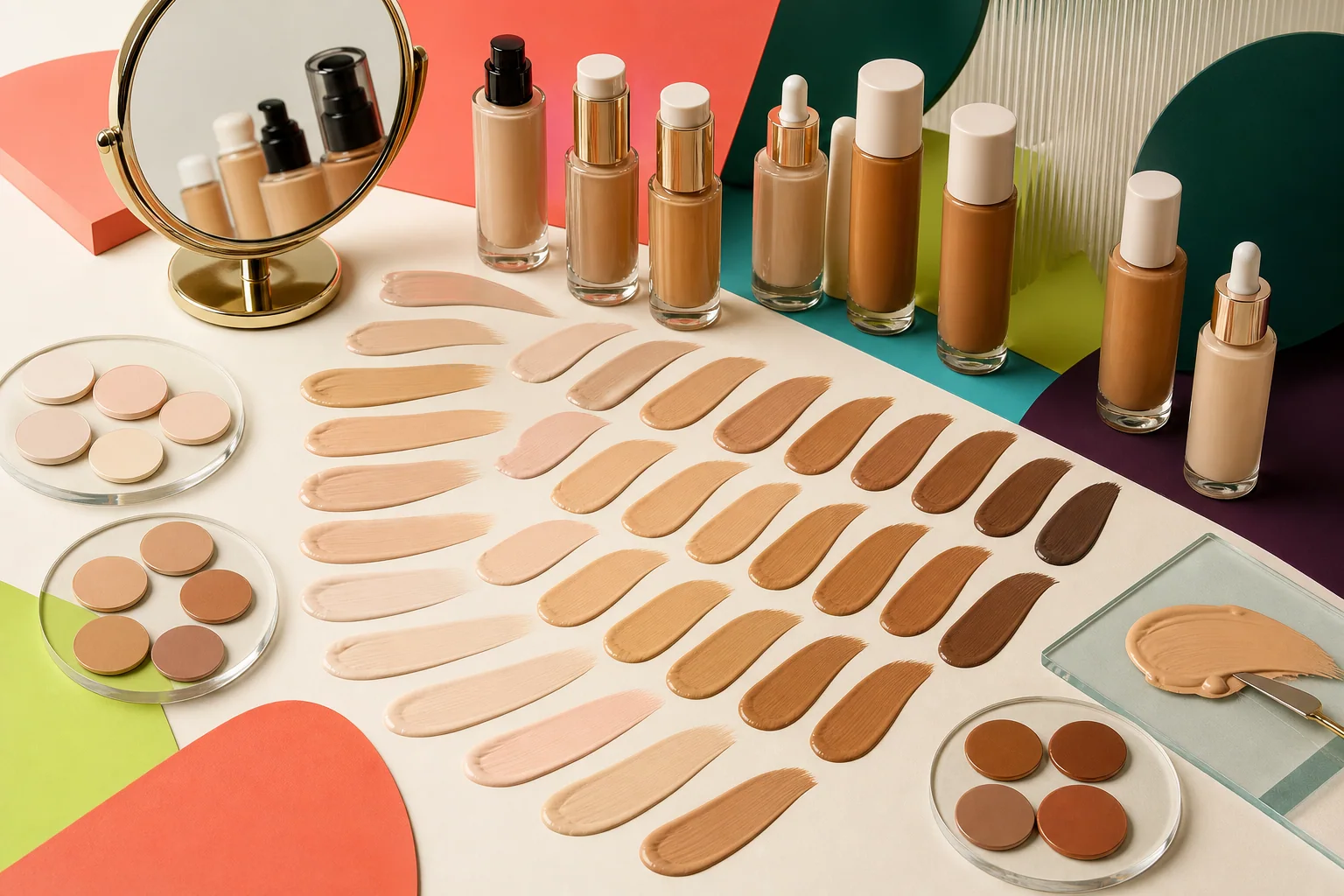
For color cosmetics, also compare pigment effect rather than relying on shade names. “Medium neutral” is not a standardized color. Swatch both products at equal thickness, let them set, and view them in indirect daylight as well as the lighting where you normally wear makeup.
For fragrance, compare the arc, not only the opening. Record what you smell after a few minutes, after an hour, and late in the wear. Similar top notes can lead to very different dry-downs.
Run a small controlled wear test
A split-face or side-by-side test is more useful than trying one product on Monday and recalling another on Friday. Use the same skin preparation, tools, amount, and setting products. Photograph both sides from the same position and avoid automatic beauty filters.
Repeat the comparison on at least two ordinary days if possible. One test can be distorted by weather, skin condition, a rushed application, or a particularly flattering light. You do not need a laboratory, but you do need consistency.
Score only the attributes in your brief. A simple five-point note for application, initial appearance, mid-wear, end-of-day wear, and removal is enough. Add a free-text note for anything the score hides: tightness, transfer, pilling, scent, or an applicator that wastes product.
A difference is not automatically a disadvantage. It matters only when it changes the outcome you selected at the start.
Do not deliberately push through stinging, swelling, or significant irritation to complete a test. Stop using the product, rinse as appropriate, and seek professional advice for a serious or persistent reaction. A dupe comparison is a shopping tool, not an allergy test or medical assessment.
Calculate the price you actually pay
Shelf price is only the first number. Compare the amount in the package, typical amount used per application, shipping, taxes, and how often the product is realistically discounted. A smaller “cheap” product may cost more per milliliter; a concentrated product may last longer despite a higher ticket price.
Waste matters too. Pumps, doe-foot applicators, jars, and fragile pressed powders do not empty in the same way. If one shade requires mixing with a second product, include that cost. If a product is repeatedly unavailable, the time and replacement purchases involved are part of its practical value.
Avoid using a temporary sale price as the permanent verdict. Record both regular and observed sale prices with a date. Beauty pricing changes, and a comparison should make that uncertainty visible.
Publish a verdict with boundaries
Instead of declaring one product “the same,” use a bounded verdict:
- Strong match: similar outcome on the attributes tested, with no important trade-off for the tester.
- Partial match: similar in one major area, but meaningfully different in another.
- Alternative, not a dupe: serves the same routine role but creates a different result.
- Not enough evidence: shade, wear conditions, or repeat tests were insufficient.
Name the tester’s skin type or preferences when relevant, but do not turn one person’s experience into a universal claim. Wear time, comfort, scent perception, and even visible color can vary across people and environments.
Keep a lightweight comparison record
Save the product names and exact shades, test dates, photos, prices, tools, and short notes. This is especially useful when packaging changes or a product is reformulated. Your future self should be able to understand why the match worked—not merely remember that someone called it a dupe.
The best dupe verdict is not the most dramatic one. It is the one that tells another shopper what was compared, what was not, where the products converge, and where they separate. That turns a catchy claim into information you can actually use.
Turn the framework into a smarter product shortlist.
Use Dupes to compare products, inspect possible matches, and save the options worth revisiting.
Download on the App Store